How to Manage Incontinence in the Elderly Advice for Carers
Carer Resources

In Ihrem Warenkorb:
Es befinden sich noch keine Artikel in Ihrem Warenkorb.
Quantity: ZULETZT HINZUGEFÜGTE ARTIKEL Artikel gesamt: Summe: Zum WarenkorbWe help you
In our FAQ you will find answers to the most frequently asked questions. Here you can also find out the easiest way to contact us.
Customer serviceIncontinence Advice
Changing an incontinence pad is an essential part of caring for someone with urinary or bowel incontinence. You definitely want to preserve their comfort and dignity. It is the reason why you need to use the correct positioning technique to help prevent leaks and skin issues like Incontinence Associated Dermatitis (IAD) cropping up.
This guide explains how to choose the right incontinence pad, preparing for a pad change, and positioning the product correctly. It will delve on how to provide care safely for both you and the person you're caring for.

Even the highest-quality incontinence pad won’t provide the desired protection if it isn’t fitted properly. You should make sure you have well-positioned pad which will help to:
Prevent leaks
Improve comfort
Reduce unpleasant odours
Protect the skin from prolonged exposure to moisture
Allow the wearer to move more comfortably
Maintain dignity and confidence
Correct positioning also helps the absorbent area of the pad sit where it is needed most. This allows the product to work effectively while helping to keep moisture away from the skin. A secure, comfortable fit can be particularly important when the person is moving, changing position in bed or wearing the pad for longer periods, such as overnight.
The right positioning is just as important as choosing the correct size and absorbency level. Taking a few moments to check the fit after every change can make a noticeable difference to comfort, protection and confidence.
How to Change an Incontinence Pad | Caregiver Guide
Before changing an incontinence pad, it is good to ensure that the product is suitable for the person's needs.
You ought to factor in the following:
The severity of urinary or bowel leakage
Daytime or overnight use
The person's size and body shape
Whether they are mobile, partially mobile or bedridden
The type of product being used, such as an absorbent pad, shaped pad or all-in-one adult nappy
A pad that is too large may shift out of place and leak. If you go for one that is too small you may not provide enough coverage. Make sure you follow the MoliCare®’s sizing guide to help you choose the absorbency level that matches the care-recipients' needs.
You can check out our detailed guide on the types of incontinence pads to help you pick the right one
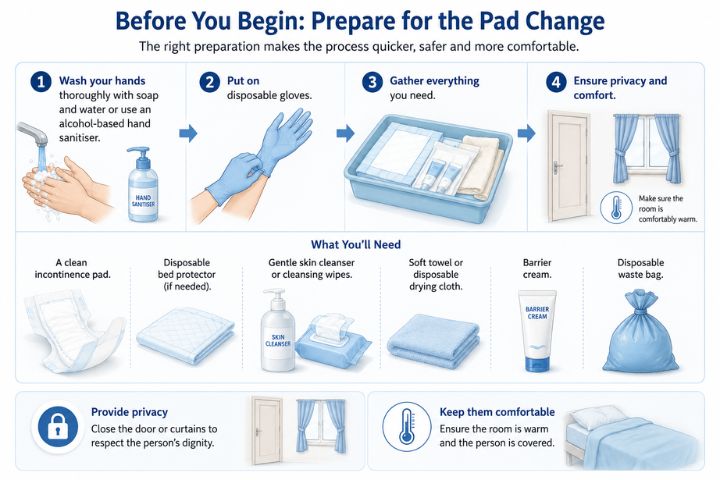
The right preparation will make the process quicker, safer and more comfortable.
So, before you begin:
Wash your hands thoroughly with soap and water or use an alcohol-based hand sanitiser
Put on disposable gloves
Gather everything you need, including:
A clean incontinence pad.
Disposable bed protector (if needed)
Gentle skin cleanser or cleansing wipes
Soft towel or disposable drying cloth
Barrier cream
Disposable waste bag
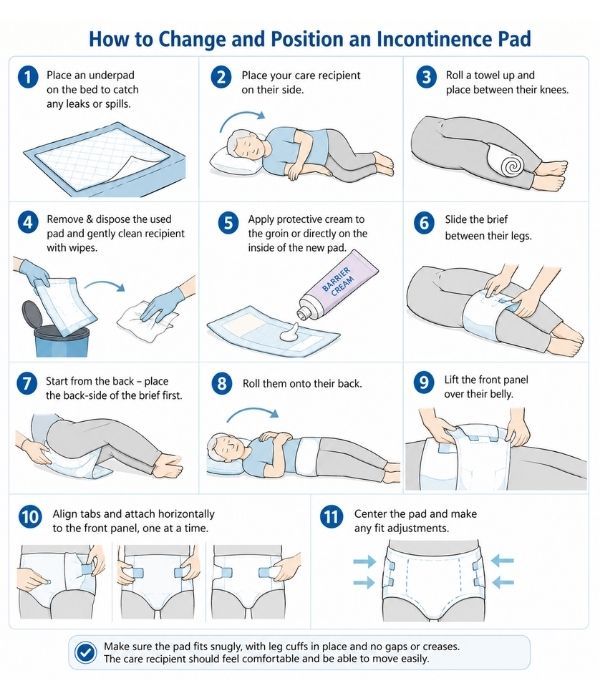
If the person is lying in bed, gently roll them onto one side with the upper leg slightly bent for support. Place a disposable bed protector underneath if required.
If they are able to stand safely, changing their pad while standing may be an easier option.
You can then carefully undo the fastening tabs if you are using an all-in-one product or remove the used pad from the underwear.
Roll the soiled product inwards before disposing of it hygienically.
Wash the intimate area using warm water or a PH-balanced cleanser. You can check out our MoliCare® Skin Cleansing Foam which provides gentle, no-rinse cleansing for sensitive intimate skin. It is ideal for daily continence care.
Once you have done so, pat the skin dry.
Take a moment to inspect the skin for redness, soreness or signs of irritation.
If the skin is healthy, apply a protective barrier cream if appropriate. A barrier cream such as MoliCare® Skin Barrier Cream can help protect skin from moisture, strengthen the skin's natural barrier and reduce the risk of irritation caused by prolonged contact with urine or faeces. Its zinc oxide-free formula also won't affect the absorbency of incontinence pads or pants, making it suitable for everyday continence care.
If the skin shows signs of mild redness or irritation, you can apply a zinc oxide cream to help protect the skin and soothe the affected area.
Tip: In case you notice broken skin, persistent redness or signs of pressure damage, seek advice from a healthcare professional.
The fitting method will depend on the type of incontinence product you are using.
Place the adhesive strip securely inside close-fitting underwear, ensuring the absorbent section is centred correctly.
Help the person step into the garment and pull it up like ordinary underwear, making sure it fits comfortably around the waist and legs.
Fold the product lengthways before fitting
While the person is lying on their side, slide half of the product underneath the hip
Gently roll them back onto their back and pull the remaining half into position
Bring the front section between the legs and fasten the tabs evenly on both sides
Before finishing, make sure:
The product fits snugly without being too tight
There are no creases around the groin
The leg cuffs are positioned correctly
The fastening tabs are secure
The person feels comfortable
A well-positioned pad should stay in place without restricting movement.
Changing frequency depends on the level of incontinence and the absorbency of the product. In fact, regular changes help reduce skin irritation, minimise odours and improve comfort.
As a general guide:
Light absorbency products should be changed whenever they become wet
Moderate to high absorbency products are commonly changed two or three times a day
Overnight products should usually be replaced in the morning. Never delay changing a pad that has become heavily soiled or if the person requests a fresh one.
For more detailed advice on changing frequency, including the signs that it’s time for a fresh pad, read our guide on how regularly you should change an incontinence pad
Some people tend to find it difficult to accept help with intimate care. As a caregiver, you can do your utmost best to make the experience more positive by:
Respecting the person's privacy
Explaining each step before carrying it out
Encouraging them to help where they can
Keeping them covered whenever possible
Ensuring they stay warm throughout the change
Speaking calmly and reassuringly
Changing an incontinence pad should not place unnecessary strain on your body. You should also make sure to protect and take good care of yourself.
Here are a few ways to do so:
Encourage the person to assist with movements where possible
Roll the person rather than lifting them
Bend your knees and use your leg muscles instead of your back
Avoid twisting while supporting their weight
Walk around the bed rather than leaning across it. If the person cannot assist with movement, it is best to ask another caregiver for help or use appropriate moving and handling equipment if available
Providing effective continence care starts with choosing the right products. Daily care will be much easier if you go for well-fitting, highly absorbent incontinence pads combined with suitable skin care products and correct positioning techniques. This way you will spend less time worrying about leaks and more time focusing on the wellbeing of the person under your care.
With several different options available, our guide to the different types of incontinence pads can help you understand which product may be best suited to the person you care for. This way, you can spend less time worrying about leaks and more time focusing on their comfort and wellbeing.
The frequency depends on the person's level of incontinence, the absorbency of the product and whether it has become wet or soiled. As a general guide, pads should be changed as soon as they become saturated or uncomfortable. If you are caring for someone with moderate to severe incontinence, the pads should be changed two to three times a day, although individual needs may vary.
A correctly fitted incontinence pad should sit snugly against the body without really feeling too tight. There should be no gaps around the legs or waist and no creases in the material. The product should stay securely in place during movement.
It is best to go for skincare products specifically formulated for incontinence care. MoliCare® has tailored PH-balanced cleansers and barrier creams to help protect delicate skin from prolonged exposure to moisture without trading off on absorbency of incontinence pads or pants.
Check the skin during every pad change for signs of redness, irritation or damage. Mild irritation may be alleviated with a protective barrier cream or zinc oxide cream designed for incontinence care. You can consult a GP or healthcare professional if signs like redness persist, the skin breaks down or pressure sores develop.
People with limited mobility often benefit from high-absorbency products such as shaped pads with fixation pants or all-in-one adult nappies with fastening tabs. The ideal choice depends on the person's level of incontinence, mobility, body shape and individual care needs.